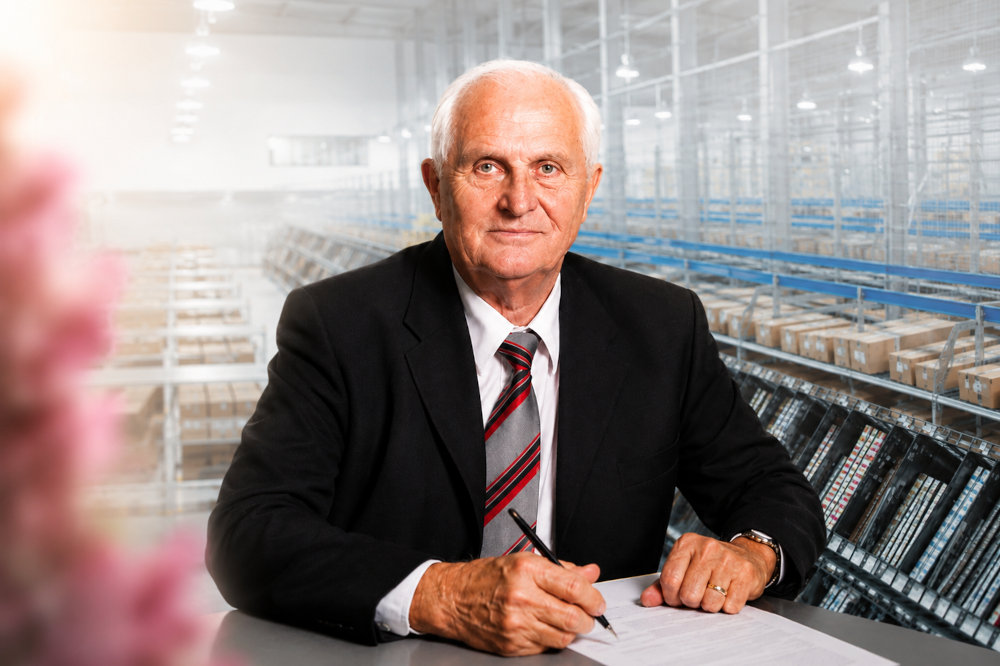
Günter Knapp
Pioneer of Automated Pharmaceutical Logistics
Günter Knapp (1907–1989) represents an early and lasting technological leap in technical logistics: the automation of order fulfilment in pharmaceutical wholesale distribution. With the development of the A-Frame automatic picking system, he created the foundation for fast, highly accurate and automated picking of pharmaceutical packages, thereby revolutionising pharmaceutical logistics.
| Industry | Intralogistik, Mechanical Engineering |
| Country | Austria |
| Last Position | Ing. Günter Knapp, Founder of KNAPP AG |
| Inducted into the Logistics Hall of Fame | 2026 |
-
Merits
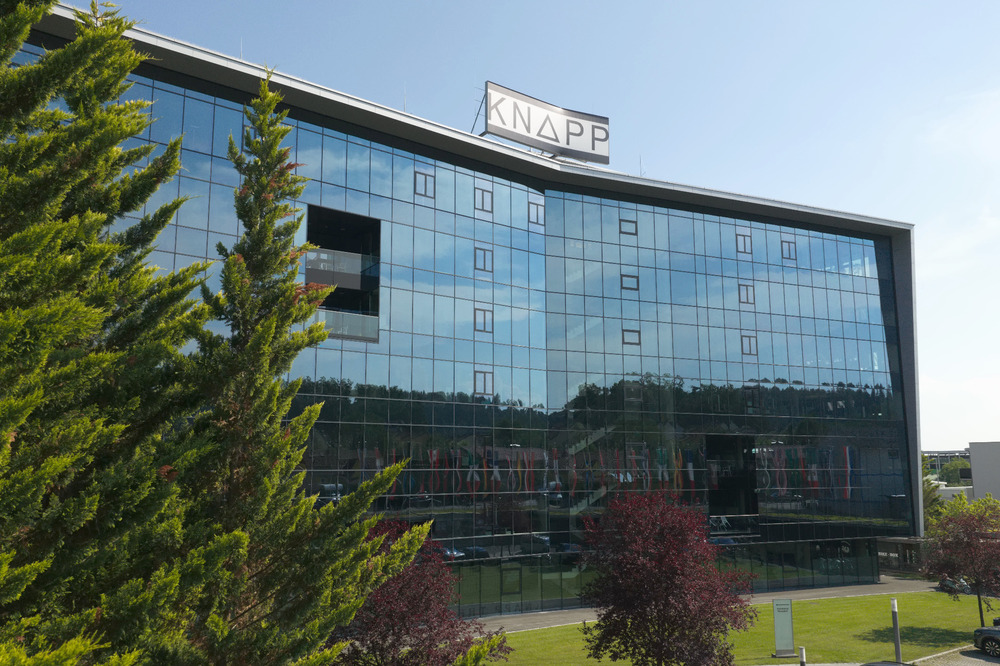
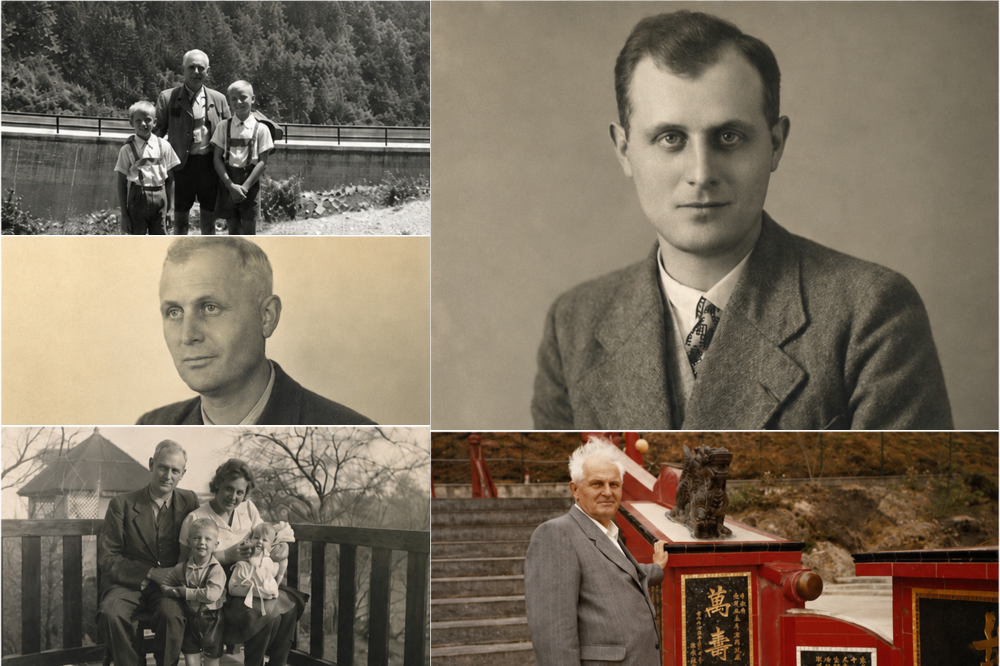
- Günter Knapp was an Austrian inventor and entrepreneur. In 1952, he founded what is now KNAPP AG in Graz, Austria. The company developed from a small workshop into one of the world's leading providers of warehouse logistics and automation solutions. Many of his inventions were far ahead of their time. After his death in 1989, the company was continued first by his family and later by professional management.
- Starting in a basement workshop with two employees, Knapp initially developed specialised technical machines such as oil burners, pumps, doughnut-filling machines and equipment for commercial businesses. These early inventions already demonstrated his particular strength: he identified technical challenges in everyday operations and translated them into simple, robust and practical solutions. Later, he focused on conveyor technology as well as automated warehouse and picking systems – particularly for the pharmaceutical sector.
- The inventor recognised an important logistics challenge at an early stage: pharmaceutical product ranges were constantly expanding, while pharmacies needed to be supplied faster, more reliably and with virtually no errors. Manual picking limited throughput, speed and quality. For Knapp, this was not only a technical challenge but also a question of supply security.
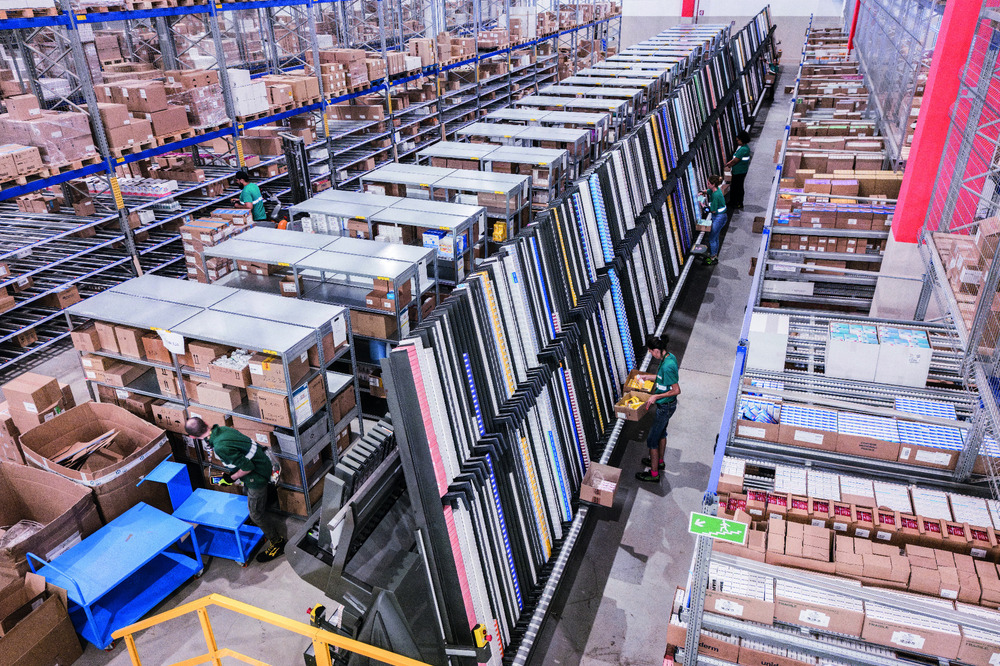
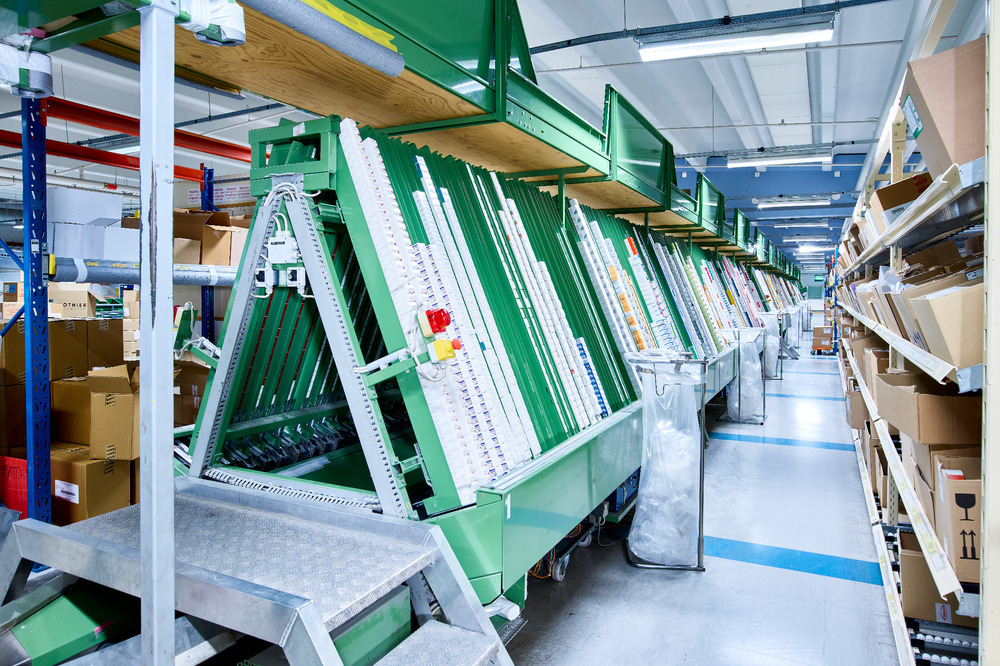
- One of his most significant achievements was the development of the A-Frame automatic picking system and the central conveyor concept that evolved from it for automated order fulfilment in pharmaceutical wholesale distribution. This technology was specifically designed to process large quantities of small packages – especially pharmaceutical products – at very high speed and with a minimal error rate. It enabled extremely short delivery times and significantly improved process reliability.
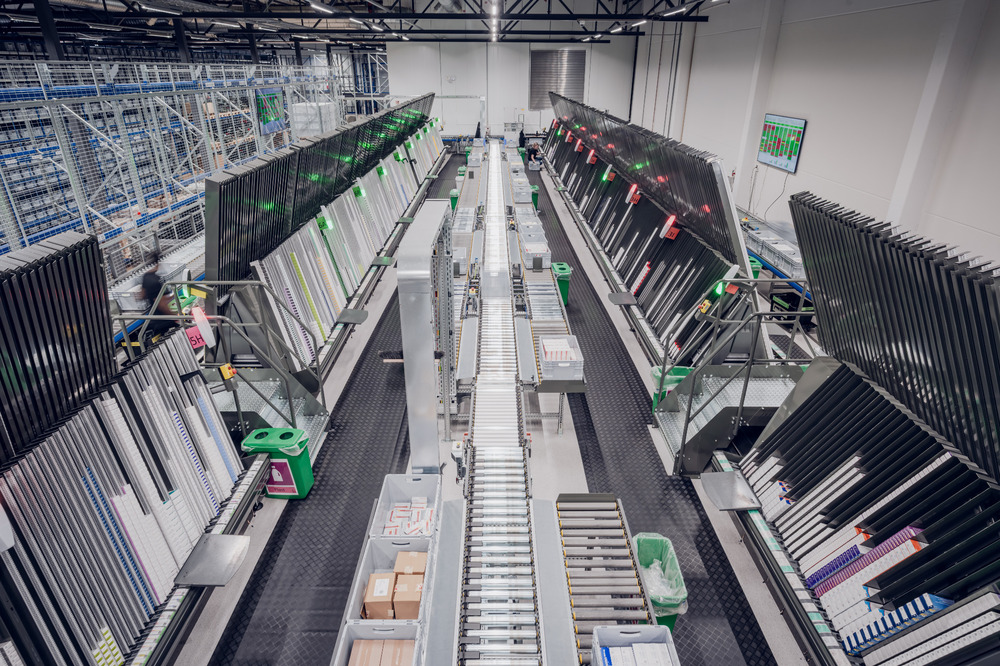
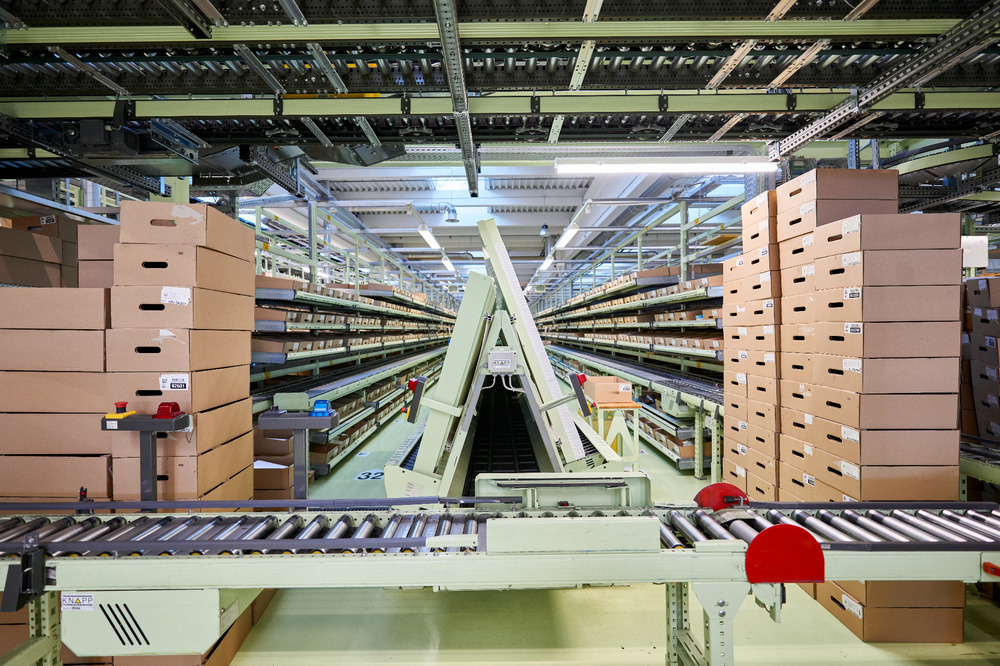
- The A-Frame is an automatic dispensing system consisting of inclined channels, each containing a specific product. Once an order is released, the system automatically pushes the required packages onto a conveyor belt or directly into a shipping container. This principle remains a foundation of modern high-performance picking in pharmaceutical wholesale distribution.
- By the late 1950s, Günter Knapp had already developed an initial autopicker designed to simplify and accelerate the retrieval of pharmaceutical products in wholesale distribution centres. Although the market was initially not ready for this innovation, Knapp remained committed to his idea and continued developing it over decades. Conveyor technology, paternoster systems, lifting equipment and electromechanical controls were gradually combined into a system approach precisely tailored to the requirements of pharmaceutical wholesalers.
- In the 1970s and early 1980s, Knapp systematically continued to develop this approach. He combined mechanical engineering, conveyor technology, electronics, microprocessor control and software to create integrated intralogistics systems. At KNAPP, the A-Frame was later closely linked with central conveyor technology, high-speed diverters and software-based order fulfilment, evolving from a single picking machine into a scalable overall system. Products were automatically discharged from their storage channels onto a central conveyor, consolidated according to individual orders and transferred into shipping containers. This created a powerful system for the automatic, fast and reproducible picking of large quantities of small-format items.
- The impact of this technology fundamentally changed pharmaceutical logistics. A-Frame and central conveyor systems significantly increased throughput, picking performance and quality, reduced travel distances and manual handling processes, and enabled tightly scheduled pharmaceutical supply chains with a high level of process reliability. KNAPP continues to draw on decades of experience in central conveyor technology and highlights its pioneering role as the inventor of the A-Frame autopicker. Independent industry publications also describe Günter Knapp’s A-Frame system as a high-speed solution for the automated consolidation of orders.
- Today, KNAPP is one of the world’s leading providers of intralogistics and automation solutions. The A-Frame and central conveyor concept remains a key element of pharmaceutical logistics and has also been successfully adapted for other industries, including cosmetics, books, media products, tobacco products and e-commerce.
- With this development, Günter Knapp not only laid the foundation for his own company but also shaped an entire discipline of logistics. His system approach anticipated many of the core principles of modern intralogistics: automated handling of small items, the integration of mechanical engineering, electronics and software, high process reliability, traceability, scalable systems and the concept of seamless material flows.
- A vivid symbol of this inventive spirit is his early doughnut-filling machine. It was one of the first specialised machines developed during the company’s founding years and is now displayed in the reception area of KNAPP AG’s headquarters in Graz. It illustrates the foundation of Günter Knapp’s innovative strength: his ability to analyse everyday process challenges from an engineering perspective, simplify them and translate them into robust, practical automation solutions.
- Following the death of the company founder, his sons Herbert and Günter Knapp continued the strategic development of the company, initially together with Dipl.-Ing. Eduard Wünscher and Dipl.-Ing. Karl Freudelsperger as co-owners and members of the management team, and later together with the long-standing Executive Board and the Bartenstein family as co-owners. They continued the innovation-driven course established by their father. This was followed by international expansion and entry into the US market. In 2025, two granddaughters of the company founder, Tanja Knapp and Sigrid Hofmann, assumed the positions of Chairwoman and Deputy Chairwoman of the Supervisory Board, continuing the connection between the entrepreneurial family and the company into the third generation.
-
Vita
1907 Born on 9 October in Marburg an der Drau (today Maribor, Slovenia).
Studied mechanical engineering at Graz University of Technology. This education formed the foundation for his later inventions and technical developments.
1930 Obtained a business licence for road freight transport and the delivery of goods with his own truck in Styria. This early experience provided practical insights into transport, supply processes and regional goods distribution.
From 1930 Worked for Steirische Elektrizitätsgesellschaft, ultimately becoming technical operations manager.
1950s Developed his first specialised machines, including oil burners (his first patent), a doughnut-filling machine, dusting systems and milk pumps. These early inventions demonstrated his exceptional inventive ability and practice-oriented approach to engineering.
Late 1950s / early 1960s Developed the first autopicker, which later became the A-Frame automatic picking system. This represented an early form of automated high-performance picking in pharmaceutical wholesale distribution.
1960s Developed and manufactured paternoster systems, goods lifts, lifting equipment and conveyor systems. Initial orders from pharmaceutical wholesalers marked the beginning of his focus on conveyor technology and specialised solutions for warehouse and distribution processes.
1972 First international order for conveyor systems and double paternoster systems at Dr. Krey & Vigener in Düsseldorf and Krefeld, Germany. This marked the beginning of international expansion in pharmaceutical wholesale distribution.
1970s Increased focus on research, development and electronics. The company’s activities evolved from mechanical conveyor technology towards electronically controlled logistics systems.
1978 First successful computer installation. Microprocessors took over container control at picking stations, creating the foundation for precise, fast and reproducible order processing.
1980 Acquisition of the site in Hart near Graz and relocation to the company’s current headquarters. This created the industrial foundation for further growth and international expansion.
Early 1980s Integration of mechanical engineering, electrical systems, hardware and software into fully integrated intralogistics solutions. The A-Frame automatic picking system reached market maturity and, together with central conveyor technology, developed into a powerful solution for automated order fulfilment in pharmaceutical wholesale distribution.
From 1988 International breakthrough of central conveyor systems. Automated compilation of pharmacy orders within the shortest possible time became a benchmark for high process reliability, zero-error strategies and track-and-trace processes in pharmaceutical distribution.
Late 1980s Around 100 employees and an export ratio of approximately 90 percent. The picking technology was transferred to other industries, including cosmetics, books and textiles.
1989 Günter Knapp died at the age of 82. His company continued to develop the technologies he pioneered and is today one of the world’s leading providers of intralogistics and automation solutions.
2026 Inducted into the Logistics Hall of Fame
-
Background Video
Fotos: LHOF / KNAPP / edited with AI